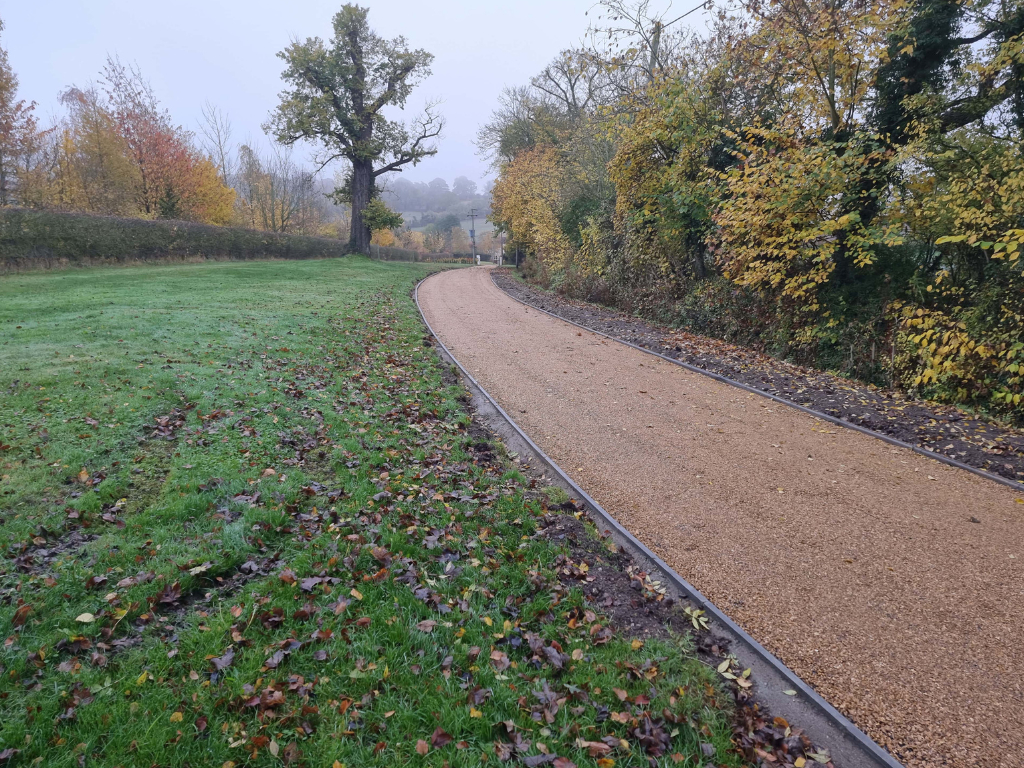
Is Tar and Chip a Low-Maintenance Driveway Surface?
When choosing a driveway surface, appearance and durability are important considerations, but homeowners should also think about how much ongoing attention the surface is likely to require. A driveway is used regularly and remains exposed to changing weather conditions throughout the year, so selecting a surface that can perform reliably without demanding excessive maintenance can be particularly appealing.
Tar and chip surfacing, sometimes described as chip and stone surfacing, combines a bituminous binder with an aggregate finish. The resulting surface has a textured, natural-looking appearance while providing a firm area suitable for regular vehicle use. For property owners in Linton, Cambridgeshire, it can be an attractive option when a practical driveway with relatively straightforward maintenance is required.
How Much Maintenance Does a Tar and Chip Driveway Need?
A properly constructed tar and chip driveway can generally be considered relatively low maintenance. It does not require constant attention to remain functional, and its textured aggregate finish can cope well with the everyday demands placed on a residential driveway.
However, low maintenance should not be confused with no maintenance. The long-term condition of any driveway depends on its construction, drainage, usage and how quickly developing problems are addressed.
The most important factor is often what happens before the visible tar and chip surface is installed. A well-prepared and stable foundation provides the support needed for the finished driveway to perform effectively.
Tar and Chip Has a Practical Surface Structure
Tar and chip surfacing is created using a bituminous binder combined with aggregate that becomes embedded into the surface.
This produces a different finish from smooth asphalt or individual paving units. The exposed aggregate gives the driveway a distinctive texture while the underlying binder holds the surface together.
For homeowners who prefer the appearance of stone but want a more consolidated driving surface than loose aggregate, this combination can be particularly useful.
The construction also means there are no individual paving joints across the main surface requiring the same type of routine attention associated with some modular paving systems.
Loose Aggregate Is Reduced Compared With a Gravel Driveway
Loose stone driveways can require regular redistribution because vehicle tyres and foot traffic naturally move the aggregate.
Stone can migrate towards the edges, collect in particular sections or leave thinner areas along frequently used vehicle routes.
Tar and chip behaves differently because aggregate is embedded into the binder.
Some loose stone can be present, particularly following installation, but the main aggregate finish is intended to become incorporated into the surface rather than continually moving around the driveway.
This can make routine upkeep more straightforward than managing a completely loose aggregate surface.
Good Installation Is the Foundation of Low Maintenance
A driveway surface can only perform as well as the construction supporting it.
If the underlying area is weak, poorly prepared or uneven, problems may eventually become visible through the finished surface. Movement beneath the driveway can lead to depressions, cracking or other forms of deterioration.
Correct preparation therefore plays a major role in determining future maintenance requirements.
Before installing tar and chip, the existing area should be assessed to establish whether the supporting construction is suitable. Where improvement is necessary, completing that work before surfacing provides a more reliable foundation for the finished driveway.
Drainage Can Influence Long-Term Condition
Water management is important for practically every driveway surface.
A driveway should be constructed with appropriate levels and falls so that rainfall can be managed effectively rather than consistently collecting in unwanted areas.
Persistent standing water can indicate a problem with levels, settlement or drainage around the surface.
Addressing these considerations during installation is preferable to attempting to manage recurring water problems after the driveway has been completed.
A well-planned tar and chip installation therefore considers the complete area rather than concentrating only on the appearance of the surface.
The Textured Finish Can Be Practical for Everyday Use
Tar and chip has a naturally textured surface because of the exposed aggregate.
This gives the driveway a less uniform appearance than some smooth surfacing options. Minor variations can therefore form part of the material’s character rather than immediately standing out against a completely uniform finish.
For many properties, this creates an understated appearance that works well within the surrounding outdoor space.
The surface still needs appropriate care, but its visual character can make it particularly suitable for homeowners who prefer a practical rather than highly polished driveway finish.
Regular Sweeping Is Useful
Basic routine maintenance can help keep a tar and chip driveway presentable.
Leaves, soil and general garden debris should not be allowed to accumulate indefinitely. Regular sweeping can prevent organic material from collecting along edges and in areas that receive less vehicle movement.
Keeping the surface clear also makes it easier to notice changes in its condition.
If a depression, damaged section or drainage issue begins developing, it is generally better to identify it while it remains relatively localised rather than waiting until deterioration becomes more extensive.
Weed Growth Often Starts Around Vulnerable Areas
Weeds do not necessarily grow through a sound driveway from deep beneath the surface. Seeds can arrive from surrounding vegetation and settle wherever enough debris and moisture collect.
Edges, small defects and areas where soil has accumulated can therefore become more susceptible to unwanted growth.
Routine cleaning can help by reducing the organic material available for seeds to establish.
Where vegetation repeatedly appears from a particular defect, it may also be worth examining the condition of that section rather than continually treating the visible growth alone.
Edges Should Not Be Overlooked
The centre of a driveway receives considerable attention because it carries most vehicle traffic, but edges can be equally important.
Poorly supported margins can gradually deteriorate, particularly if vehicles repeatedly drive over areas that were not designed to carry regular loading.
Clear and appropriately constructed boundaries help define the driveway and support the overall installation.
Homeowners can also help preserve the surface by avoiding unnecessary vehicle loading on vulnerable margins wherever possible.
Vehicle Use Influences Maintenance Requirements
Not every residential driveway experiences the same level of use.
The number of vehicle movements, vehicle weight and turning patterns can all affect how the surface performs over time.
Repeated tight turning in one location places different demands on a surface from straightforward vehicle movement. Similarly, sections that regularly carry concentrated loads may experience different wear from areas used mainly by pedestrians.
The driveway construction should therefore be appropriate for its expected use from the outset.
This is another reason professional assessment is valuable before choosing a surfacing specification.
Small Changes Should Be Investigated Before They Spread
Low-maintenance surfacing still benefits from occasional observation.
If a small depression appears, aggregate becomes noticeably disturbed in one section or the surface begins changing around an area of standing water, the underlying cause should be considered.
A localised defect does not automatically mean the entire driveway is failing.
In many situations, understanding why one area has deteriorated can allow the problem to be addressed without unnecessary work elsewhere.
Ignoring a developing weakness, however, can allow vehicle movement and weather exposure to place additional stress on the surrounding surface.
Tar and Chip Can Be Suitable for Larger Driveway Areas
Tar and chip can work particularly well where a driveway covers a substantial area.
Its continuous construction allows broad sections to be surfaced without creating a pattern of individual units across the complete driveway.
The aggregate finish can also prevent a large driveway from appearing excessively uniform.
For properties with generous vehicle access areas, careful planning of levels, turning spaces and drainage can create a practical surface that remains visually appropriate to its surroundings.
Maintenance Starts With Correct Levels
One of the easiest ways to reduce unnecessary future maintenance is to establish appropriate levels before installation.
A driveway needs to relate properly to surrounding ground, entrances, boundaries and adjoining surfaces.
Low areas can encourage water to collect, while poorly considered transitions may create awkward sections that experience concentrated vehicle loading.
Correcting these issues during preparation allows the finished tar and chip surface to follow a more suitable profile.
The visible surfacing is therefore only one part of a well-planned driveway installation.
Existing Driveways Need Assessment Before Resurfacing
Where tar and chip is being considered for an existing driveway, the condition of the current surface should be examined carefully.
Simply covering existing deterioration does not necessarily resolve the reason it developed.
Cracks, settlement, unstable areas and drainage problems can indicate weaknesses that require attention before a new surface is installed.
Professional assessment helps distinguish between an existing surface that can provide appropriate support and one that requires more substantial preparation.
This root-cause approach can help avoid carrying old problems into the new driveway.
Repairs Should Address the Cause of Damage
If a tar and chip driveway eventually develops a damaged area, repairing only what can be seen at the surface may not always provide the most appropriate result.
For example, a depression could indicate movement beneath the visible layer. Surface deterioration around persistent standing water could be associated with levels or localised settlement.
Identifying the cause allows repair work to focus on the actual weakness.
This is generally more useful than repeatedly treating the surface while leaving the underlying problem unchanged.
How Can You Keep a Tar and Chip Driveway in Good Condition?
The maintenance requirements are usually straightforward when the driveway has been correctly constructed.
Useful ongoing care includes:
- Removing leaves and accumulated debris
- Keeping surrounding drainage areas clear
- Watching for unusual standing water
- Avoiding unnecessary loading along unsupported edges
- Monitoring areas exposed to repeated turning
- Checking localised changes before they become larger
- Addressing damage according to its underlying cause
None of these measures requires constant attention. They are simply sensible ways to monitor a regularly used outdoor surface and identify changes early.
Low Maintenance Does Not Mean Ignoring the Driveway
One of the advantages of a low-maintenance surface is that it should not require continual intervention.
However, ignoring a driveway completely is different from having minimal maintenance requirements.
Weather, vehicle movement and the condition of surrounding ground can affect outdoor surfaces over time. Occasional inspection allows homeowners to recognise when something has changed.
Early attention can often keep work focused on a particular area rather than allowing a developing problem to affect more of the driveway.
When Is Tar and Chip Worth Considering?
Tar and chip can be worth considering where homeowners want a practical driveway with an aggregate appearance and relatively straightforward ongoing maintenance.
It can be particularly appealing when the preference is for a surface that feels less formal than some highly uniform finishes while still providing a consolidated area for vehicle movement.
Its suitability should always be determined in relation to the individual property.
Existing ground conditions, driveway construction, expected traffic, drainage and layout all influence whether tar and chip is the appropriate choice.
Why Professional Driveway Preparation Matters
The quality of a driveway cannot be judged solely by its top layer.
Good preparation establishes the stability, levels and support that the visible surface relies upon. If these fundamentals are overlooked, even an attractive newly laid surface may struggle to perform as intended.
Professional driveway installation therefore involves assessing the complete construction.
For tar and chip surfacing, this means ensuring that the area is properly prepared before the binder and aggregate finish are applied.
A methodical approach at this stage can contribute significantly to easier long-term maintenance.
Tar and Chip Driveways in Linton, Cambridgeshire
At Linton Driveway Installations, we consider the complete condition and intended use of a driveway before recommending an appropriate surfacing approach.
Where tar and chip is being considered, preparation, base condition, levels, drainage and expected vehicle use all form part of the assessment. This helps ensure the finished surface is supported by appropriate underlying construction rather than focusing only on its appearance.
For homeowners in Linton, Cambridgeshire, a professionally installed tar and chip driveway can provide a practical, attractive surface with relatively straightforward maintenance requirements.
Conclusion
Tar and chip can be considered a relatively low-maintenance driveway surface when it is properly prepared and professionally installed. Its consolidated aggregate finish avoids many of the movement issues associated with completely loose stone, while routine upkeep is generally centred around keeping the area clear, monitoring drainage and addressing developing defects when they appear.
However, the long-term performance of the driveway depends heavily on the construction beneath the visible surface. A stable base, appropriate levels, effective water management and suitable edge support all contribute to keeping maintenance requirements manageable.
If you are considering tar and chip surfacing for your property in Linton, Cambridgeshire, contact Linton Driveway Installations to arrange an assessment. We can review the existing area and recommend an appropriate preparation and surfacing approach for a practical, well-finished driveway.
Call us on: 01223 657 698
Click here to find out more about Linton Driveway Installations
Click here to complete our contact form and see how we can help with your driveway needs.